1961
Vasa is salvaged. The exposure to oxygen causes chemical changes in the wood.
Continue to 1962 – 1979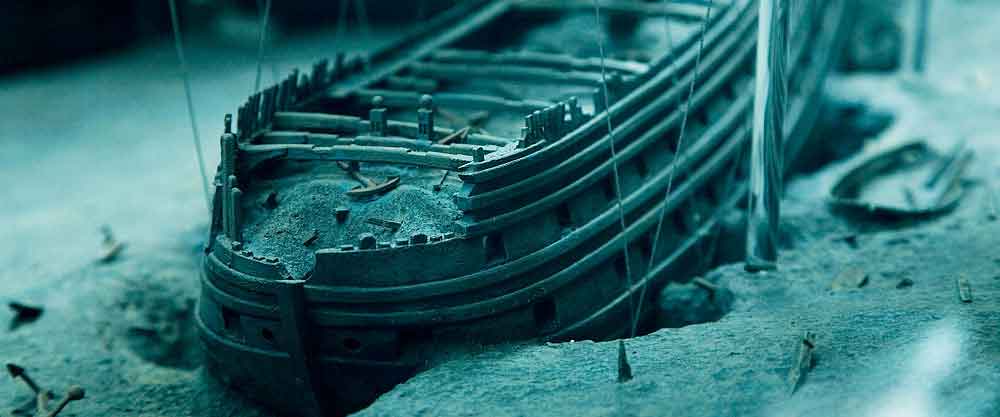
Home › Explore › Research › How we preserve Vasa › Preservation timeline
Vasa sinks in Stockholm harbour. Since the ship was newly-built and sank in cold, dark, almost oxygen-free waters, the wood is well preserved. Only the outer few centimeters of the wood are degraded by bacteria. Almost all the 5000 iron fastenings holding the ship together corrode and sulphur from the contaminated harbour water enters the wood.
Continue to 1961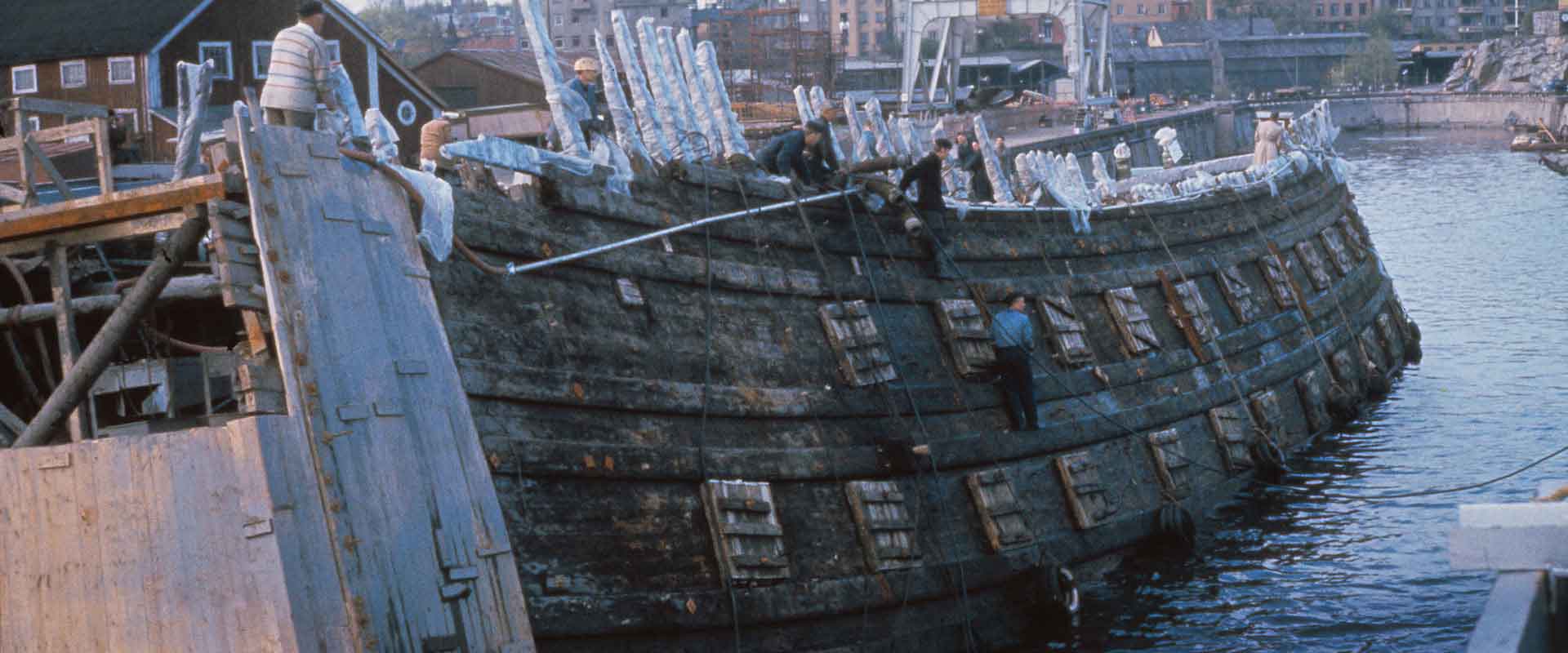
Vasa is salvaged. The exposure to oxygen causes chemical changes in the wood.
Continue to 1962 – 1979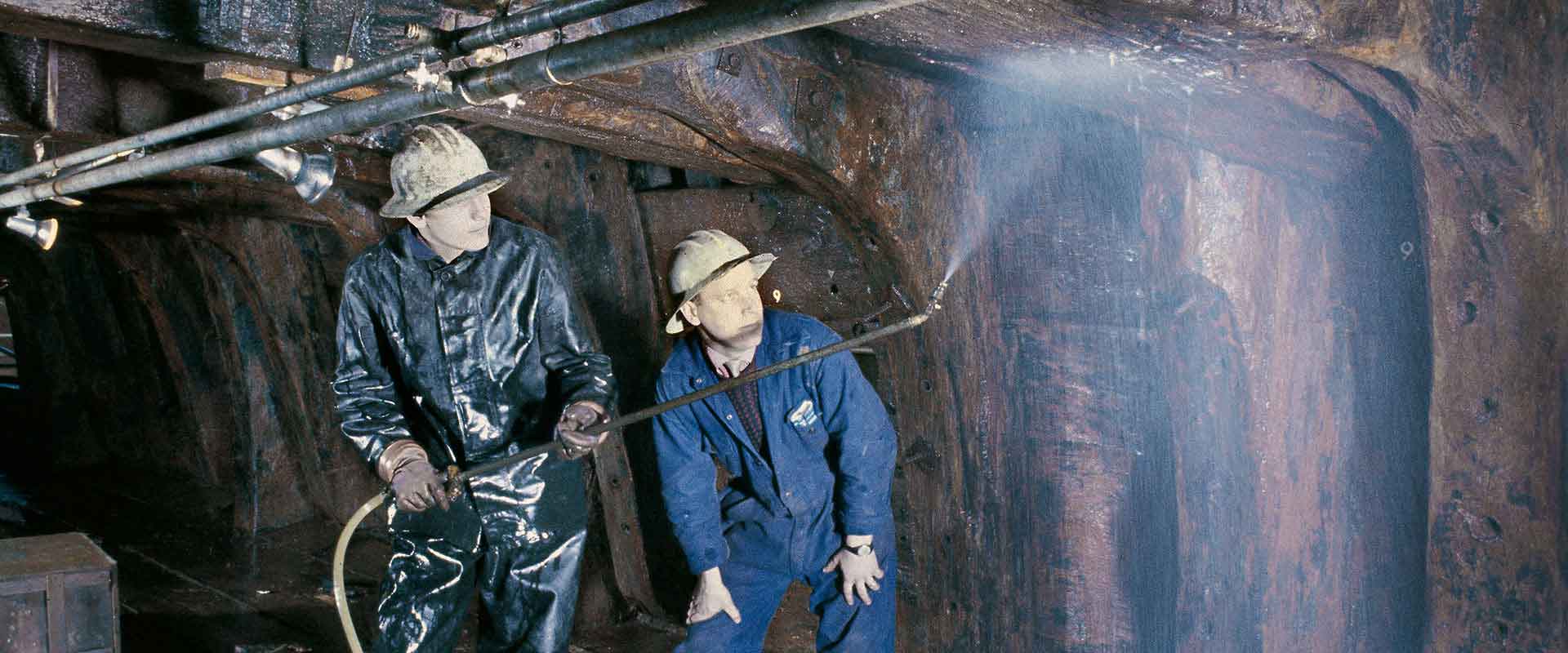
To prevent cracks and shrinkage, the ship is conserved by spraying with a water-soluble wax, polyethylene glycol or PEG. The treatment lasts for 17 years. Thousands of mild steel bolts are inserted to hold the structure together. The upper parts of the ship are reconstructed.
Continue to 1964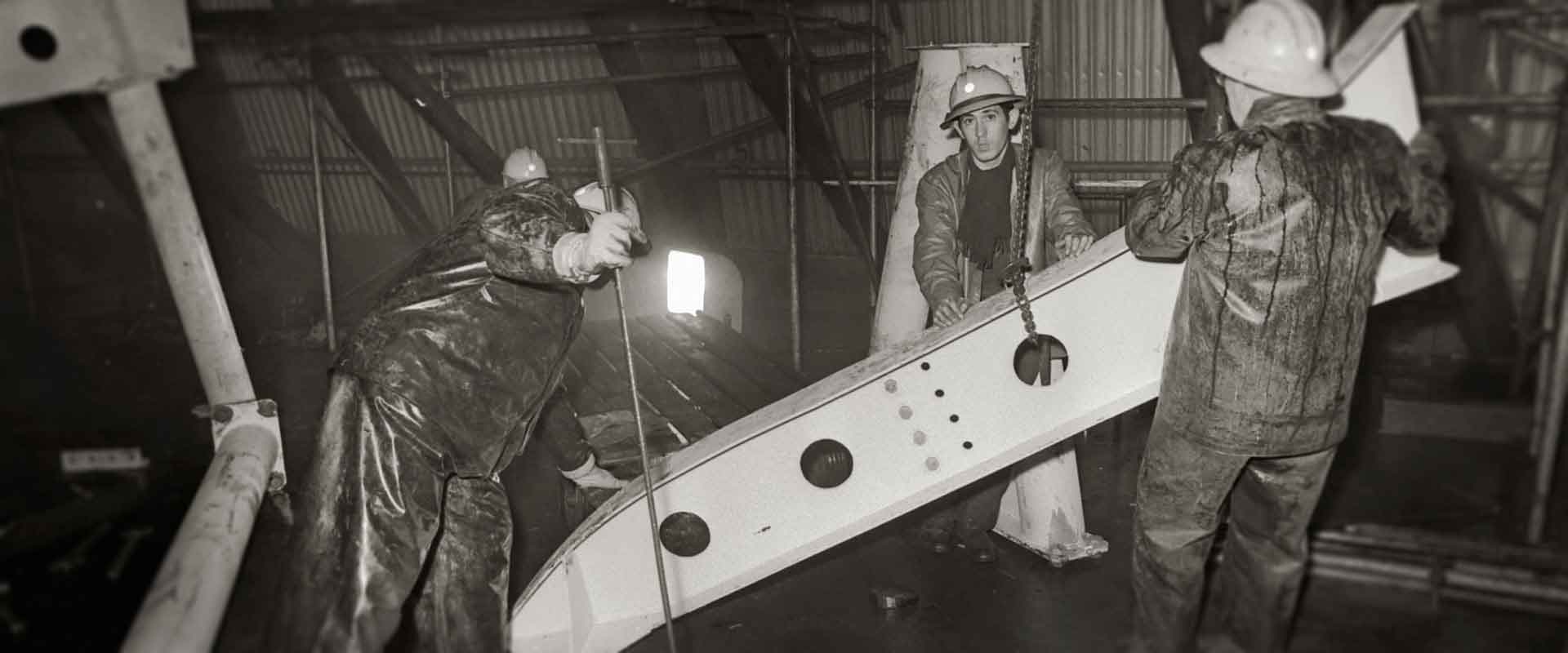
A support cradle is installed under the ship.
Continue to 1965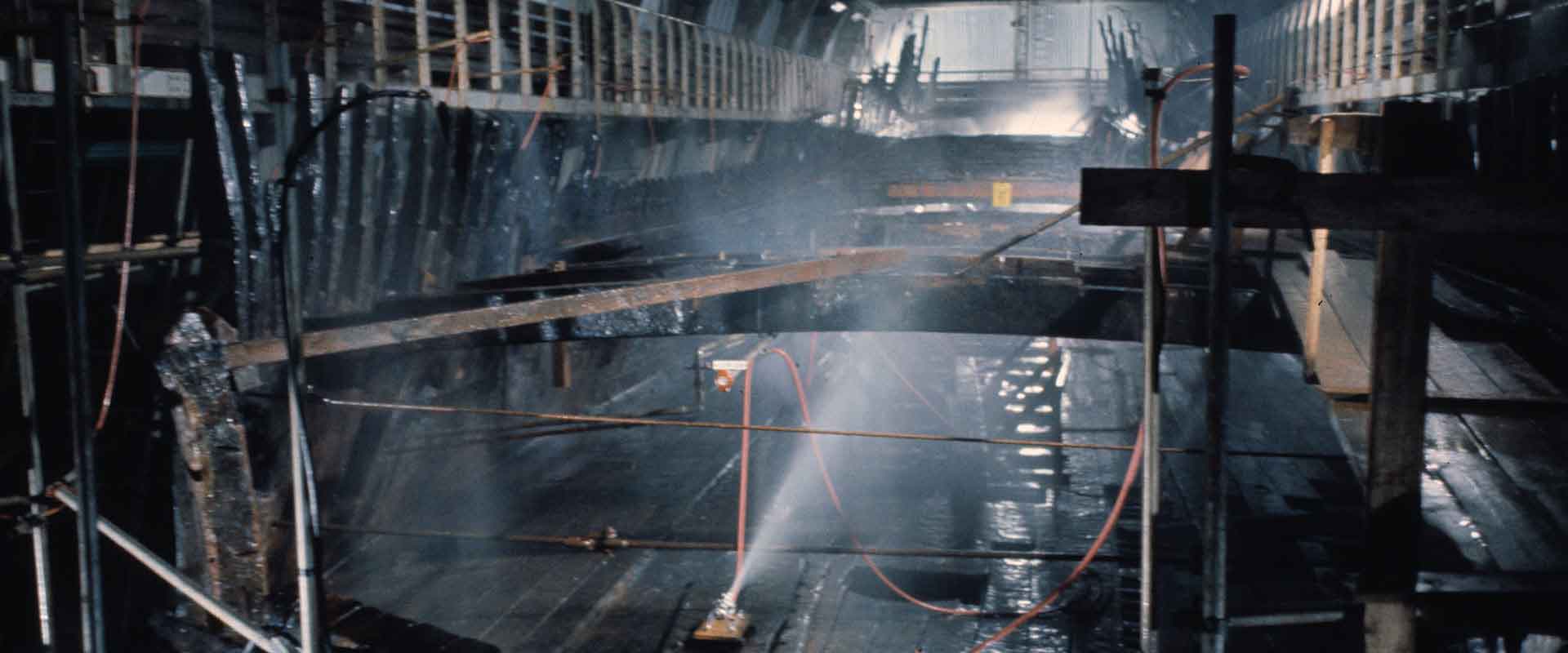
An automatic spray system is installed to replace the hand-held sprays.
Continue to 1972 – 1988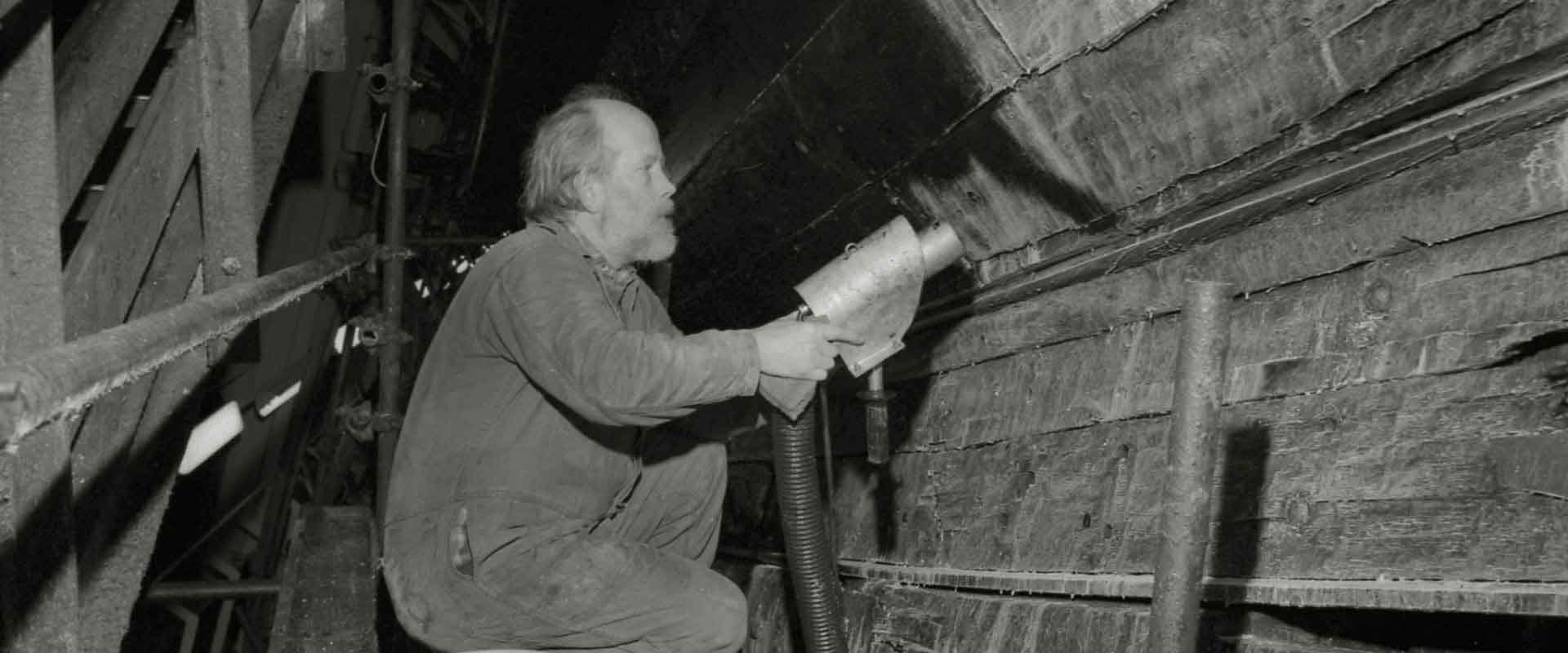
In 1979, the sprays are stopped completely. The ship gradually dries over the following years, as the air humidity is decreased from around 95 to 60%. The surface of the wood is treated with an extra layer of PEG for physical protection. In 1988, the ship is moved to the newly-built Vasa Museum. Conservation is considered complete.
Continue to 1990 – 2000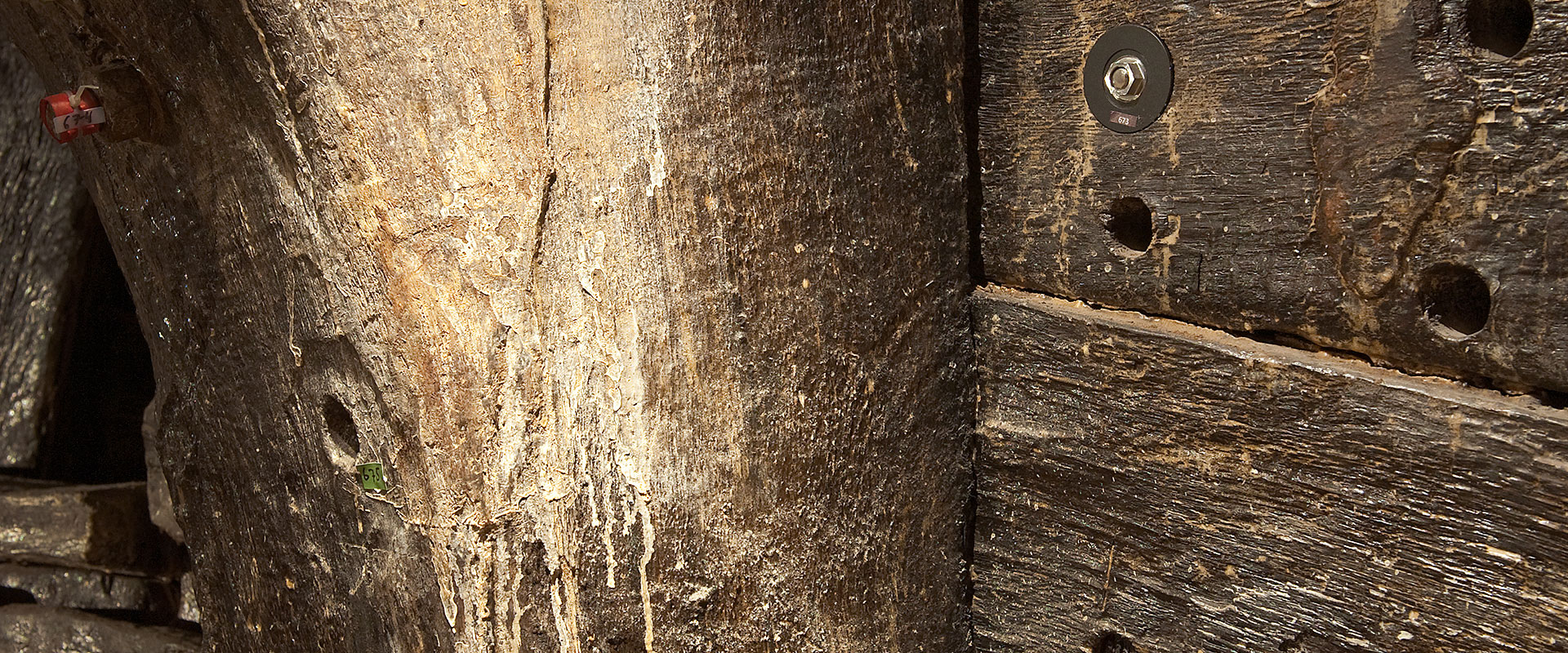
The Vasa Museum officially opens in 1990. The masts and rigging are installed and additional stanchions are added to the support cradle.
Equipped with a specialized climate-control system, the museum can be likened to an enormous display case. However, the system is not dimensioned to deal with the large number of visitors and the air humidity around the ship fluctuates greatly.
The extra moisture is absorbed by the wood and PEG. Chemical substances inside the wood, such as iron and sulphur, combine with the moisture and are drawn to the surface as the wood dries. These form yellow and white acidic deposits on the surface of the wood.
Continue to 2000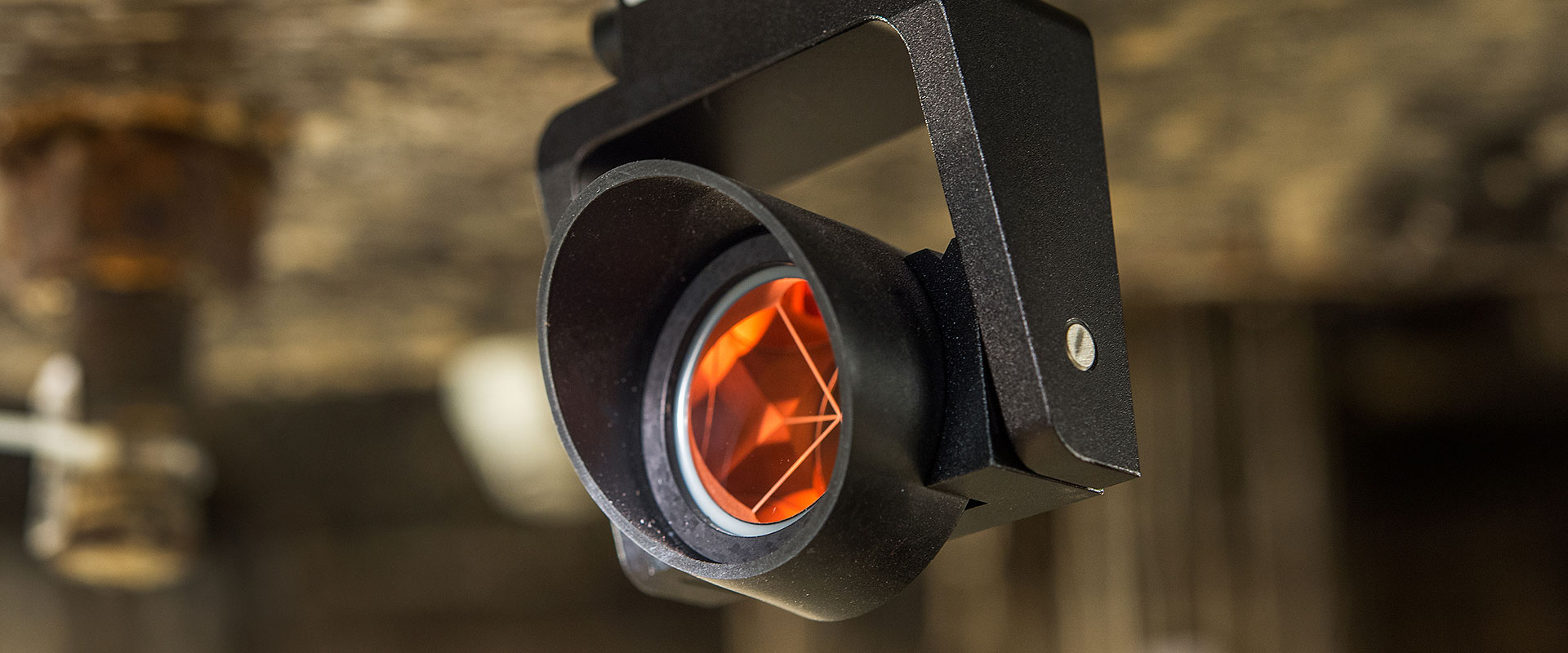
The ship which weighs around 900 tonnes is too heavy for its support. Deformations are noticeable in the hull. To monitor the deformation over time, a three-dimensional measurement system is installed and measurements are taken twice a year.
After a rainy summer, the number of acidic deposits on the surface of Vasa increases significantly. There is concern that the acidic conditions inside the wood could decease the wood's strength.
Continue to 2001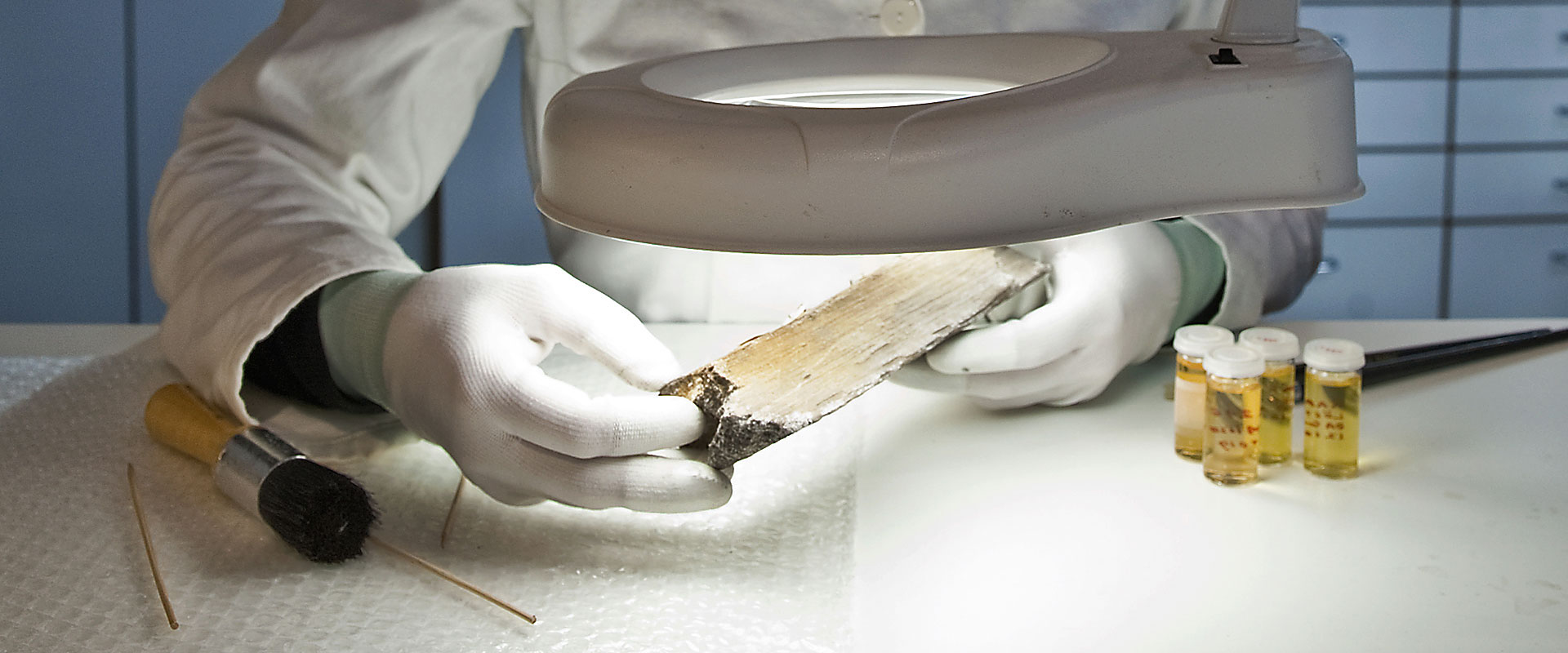
The museum assembles an international group of chemistry and conservation specialists to examine the situation. Analysis of the deposits show that they consist of various sulphur salts, often in combination with iron.
Continue to 2002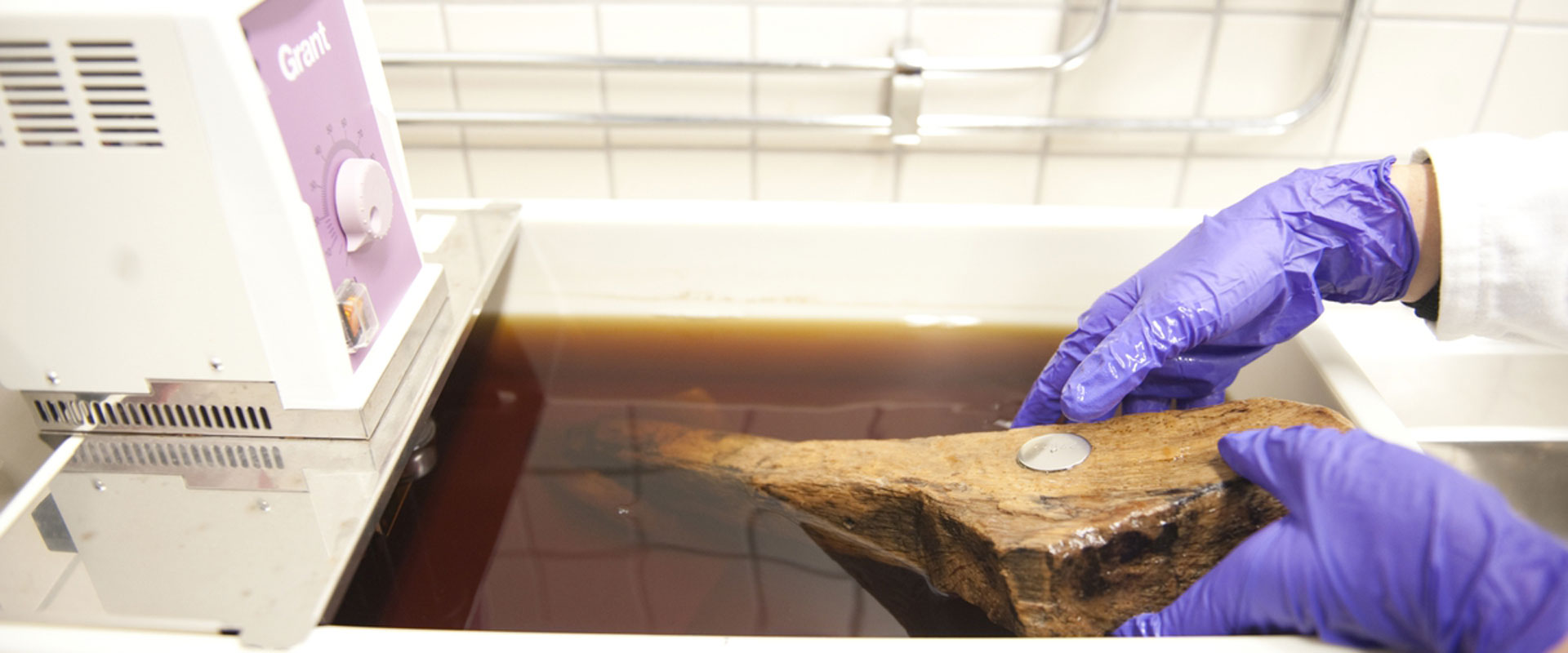
As the presence of iron can speed up various chemical reactions inside the wood, a method is developed to remove iron from the wood. The treatment appears to be successful but is very slow, and the long-term results must still be evaluated. For practical reasons, only small objects can be treated. The ship is simply too large.
Continue to 2003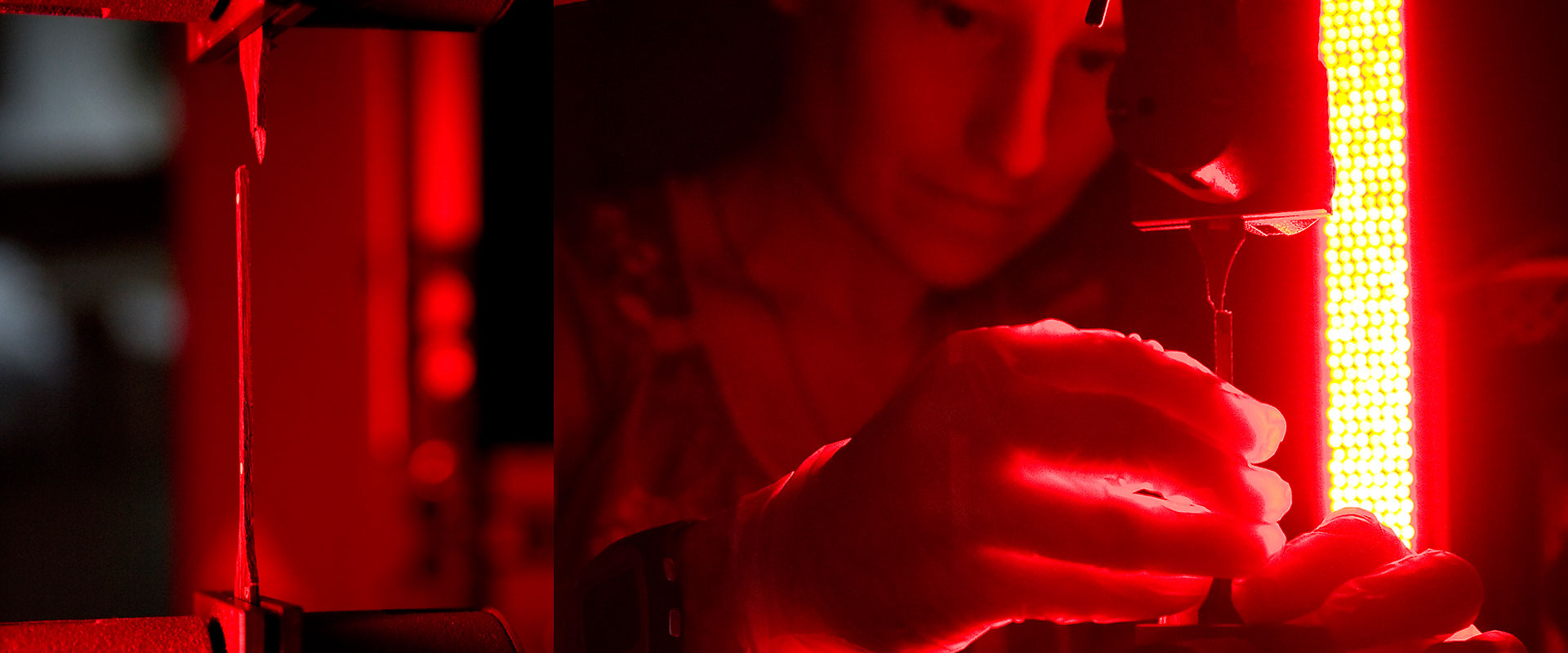
The research project, Preserve Vasa, is initiated to investigate the condition of Vasa's wood. The salt deposits are identified and explained. It is established that no micro-biological degradation of the wood is occurring, and that the conservation agent PEG is mainly stable.
Continue to 2004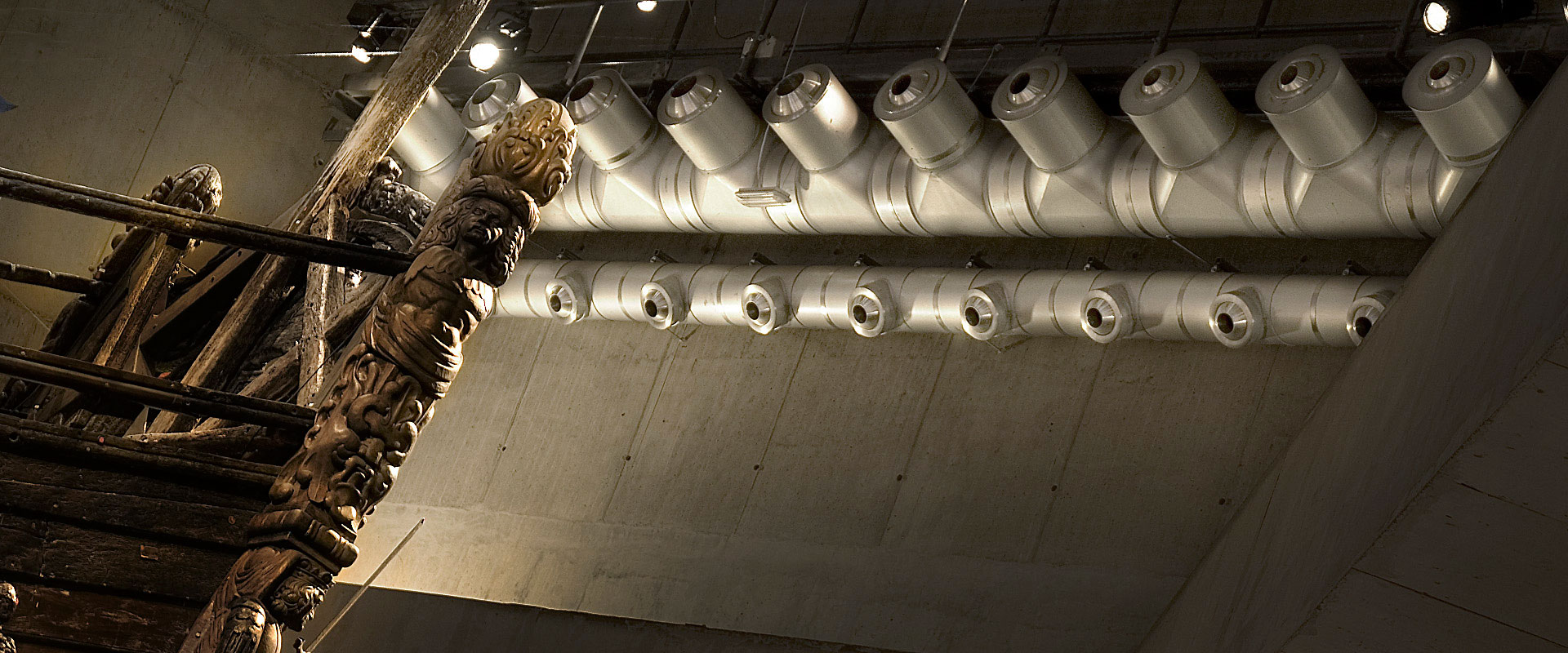
The museum's climate control system is upgraded, producing a stable year-round climate of 53 +/- 2 % and 18.5 +/- 1.5 °C. The climate has remained stable despite the increase in visitor numbers, which since 2007 has exceeded 1 million per year. This is probably the most important measure to stabilise the wood both chemically and structurally.
Continue to 2008 – 2011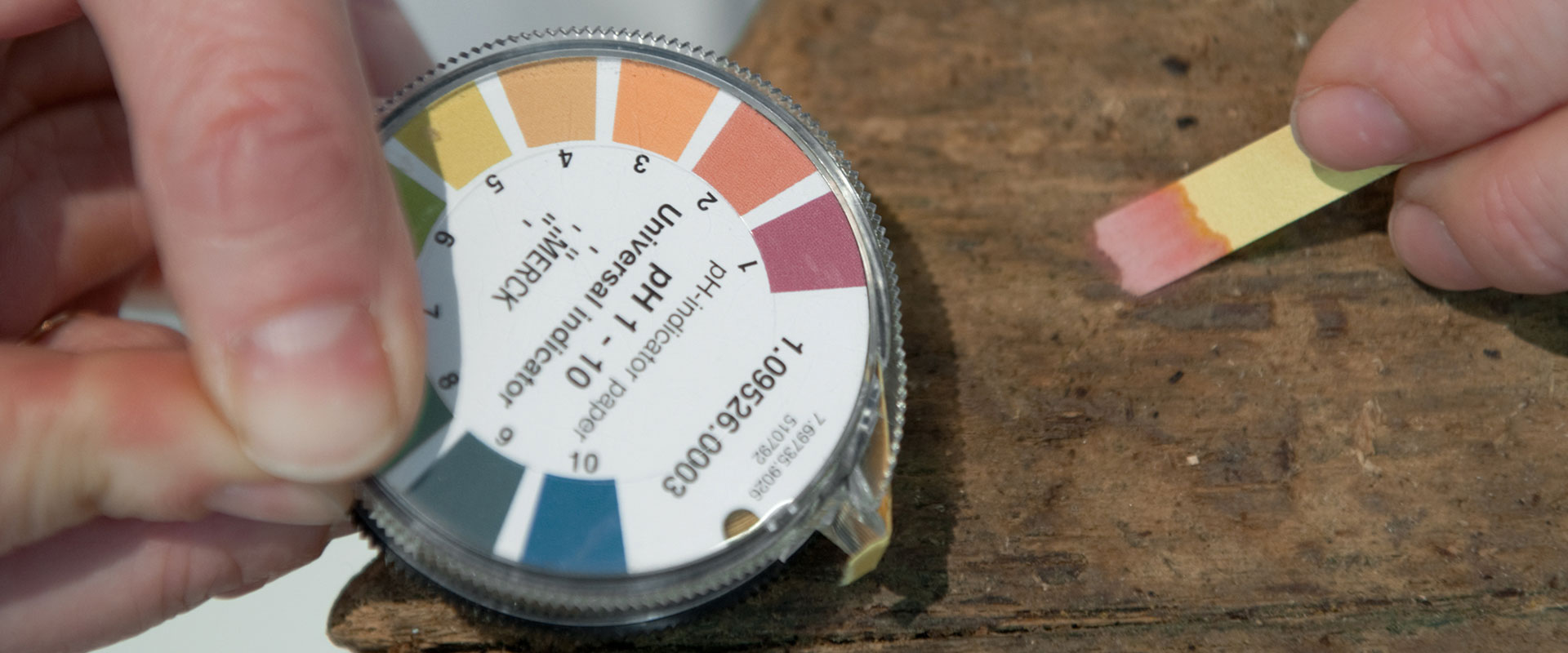
A second research project, A Future for Vasa, begins. Research focuses on conditions deep inside Vasa's timbers, where the wood strength is greatly reduced. This seems to be connected to high levels of iron and increased acidity. The results highlight the need to improve Vasa's support.
Continue to 2011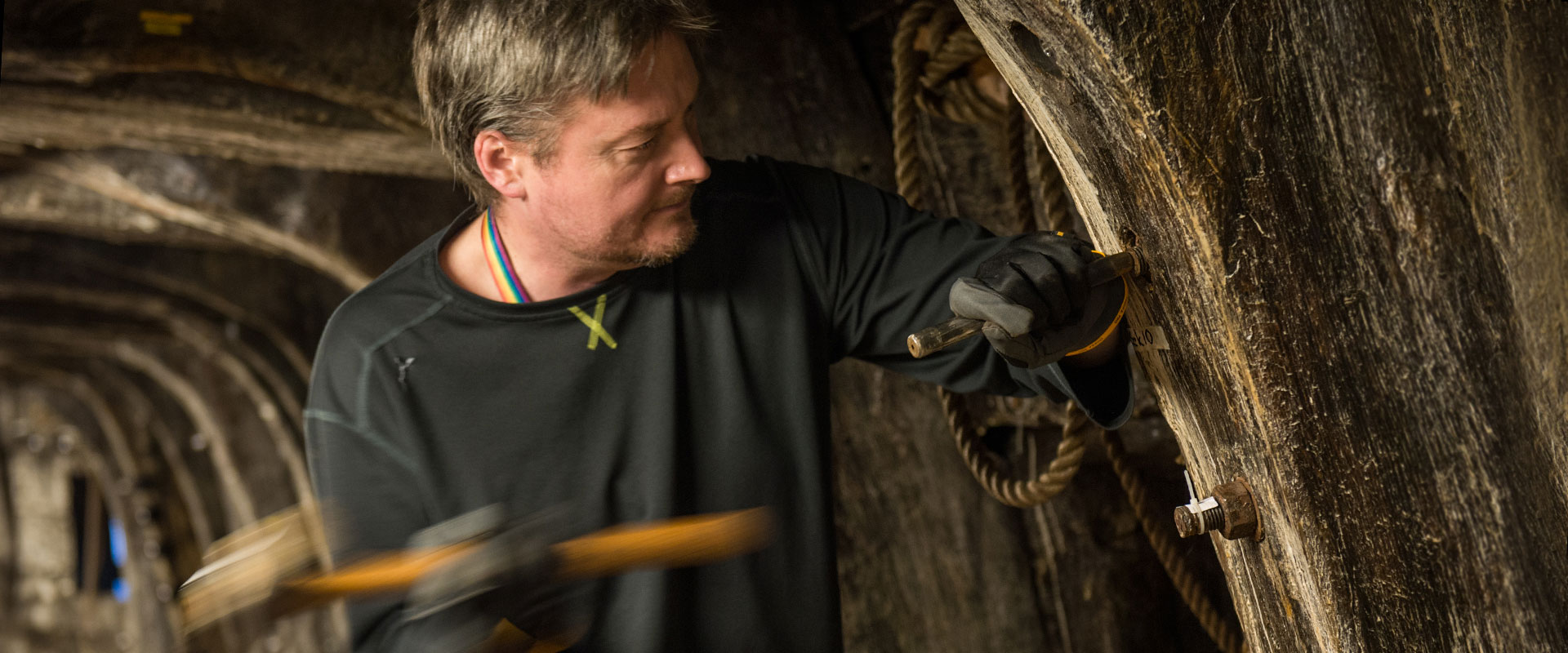
Replacement of the 1960s bolts begins in order to increase the structural stability of the ship. After the ship was raised, mild steel bolts were inserted in the original bolt-holes to hold the ship together, but over time these have corroded and the ship has deformed. The new bolts have a totally new design that can adapt to changes in the ship and are 50% lighter in weight. The final design was developed in collaboration with the Swedish steel company, Sandvik, who are providing the strong, corrosion-resistant steel (SAF 2707) for the work.
Continue to 2012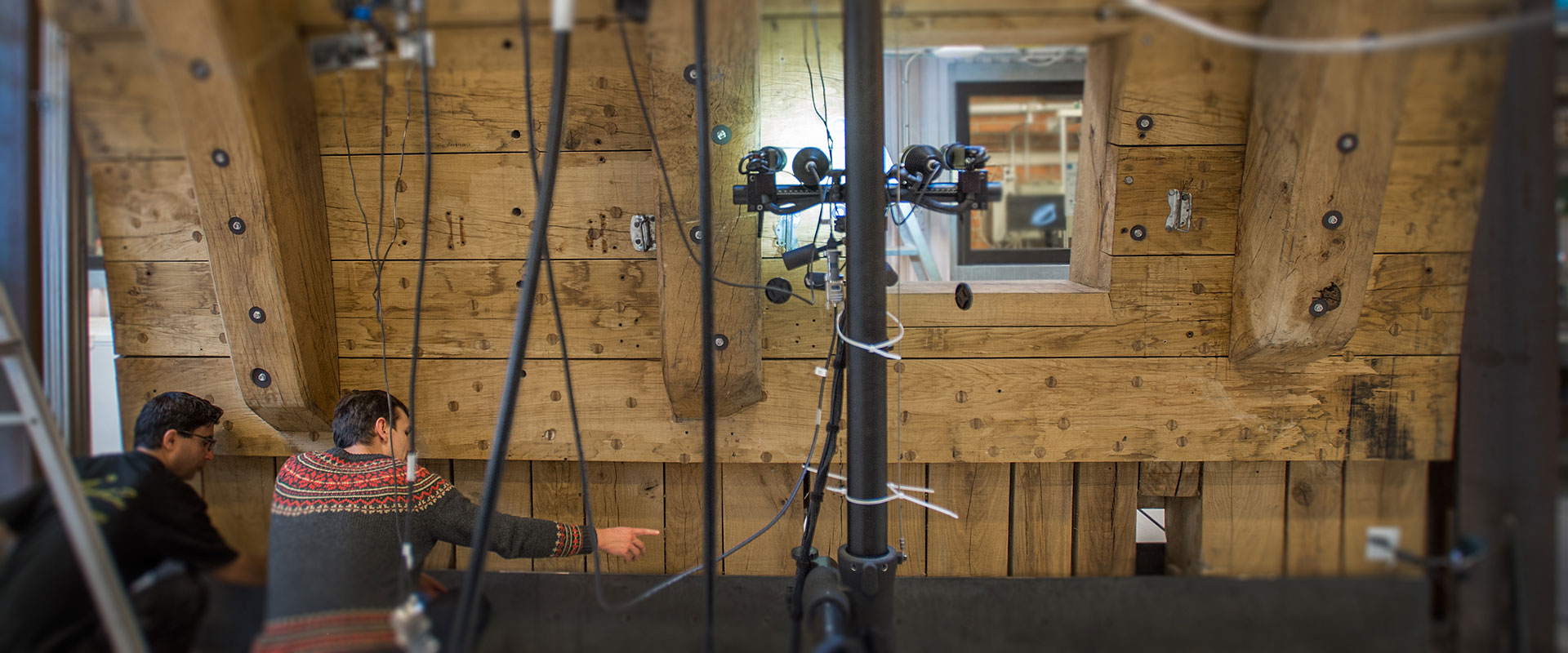
The research project, Support Vasa, begins. The goal is to determine the mechanical characteristics of Vasa's wood from the microscopic scale, to the intermediate scale of individual timbers and joints, and finally to the entire ship.
A copy of a section of Vasa's hull, 4 x 5 x 2 metres, is constructed to examine test the mechanical strength of the ship's joints. The replica is placed in a test rig and subjected to various forces, in order to measure how these affect the joints. This knowledge provides vital information for designing a long-term solution for how to support the ship.
Continue to 2012 – 2015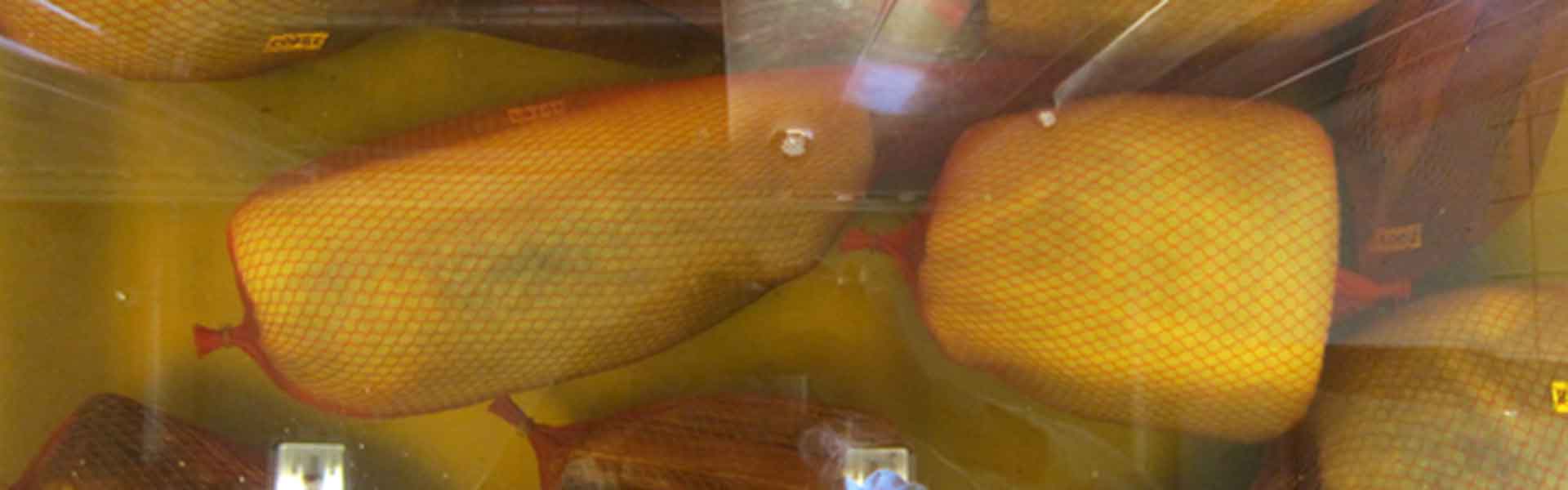
A series of experiments is performed to re-conserve some of Vasa’s artefacts, with the aim of removing iron from the wood. Iron entered the structure of the wood during its time on the seabed, and now contributes to harmful chemical reactions in the wood. A method is developed in collaboration with the Department of Chemistry at the Swedish University of Agricultural Sciences to extract iron using what are known as high performance iron chelators (HPIC). The experiments result in the document Iron Removal from Waterlogged Wood, which can be read here:
→ Iron Removal from Waterlogged Wood (pdf)
Through the treatment, the conservation agent (PEG) is also extracted from the wood, so the artefacts require re-conservation after treatment. This is done through PEG impregnation followed by freeze-drying – a gentle method currently used to preserve archaeological waterlogged wood. The results are good, enabling iron to largely be removed from the wood. This means that the wood is more chemically stable. Even if methods are developed and improved, new treatments will always put stress on the artefacts. The benefits of removing iron must be carefully weighed against the risks and negative effects of treatment. Much work remains to be done to ascertain both the positive and the negative effects of iron removal and re-conservation of artefacts.
Continue to 2016 – 2018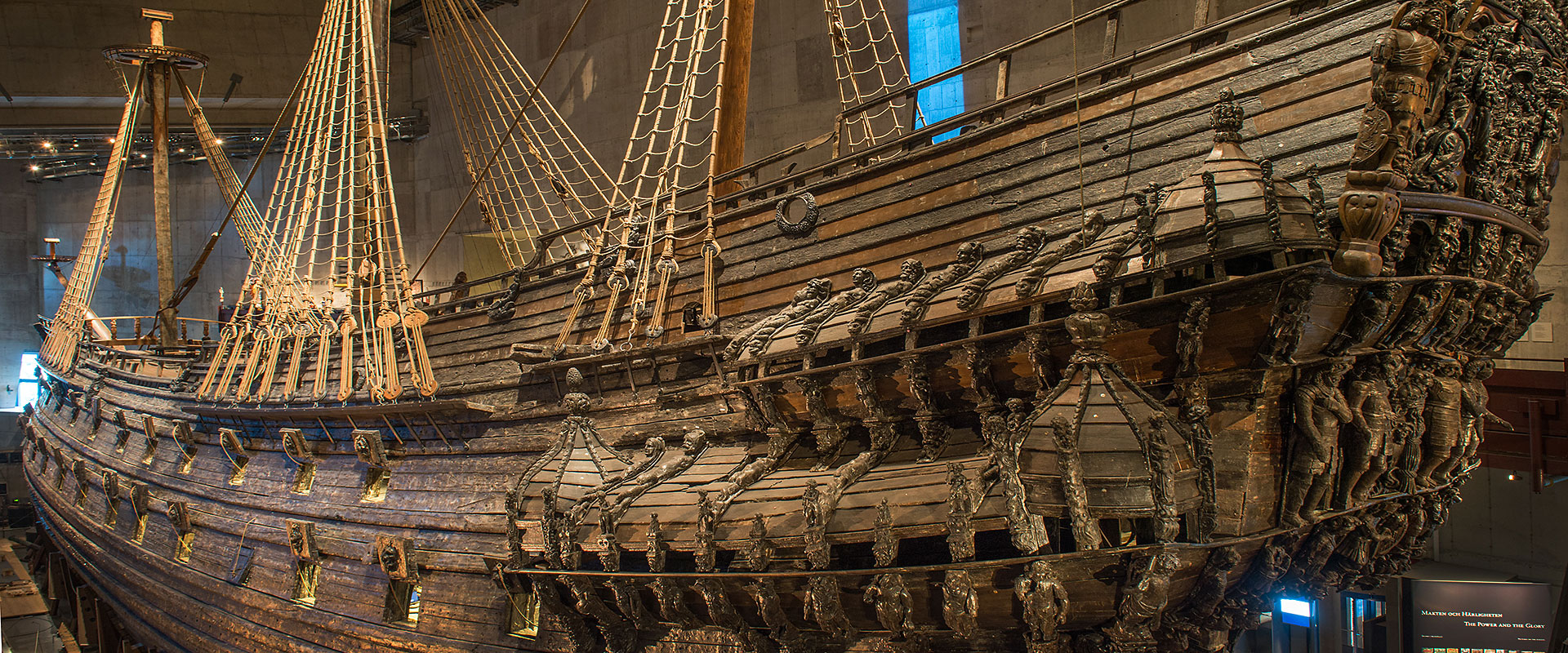
Studies of chemical and mechanical changes in Vasa continue. The museum climate remains stable and the acidity and strength of the wood is monitored. With increased knowledge of how the wood characteristics change over time, we are continuously improving the conditions for preserving Vasa for future generations.
The work on a new support structure has begun. The new structure will consist of both internal and external supports.
Continue to 2018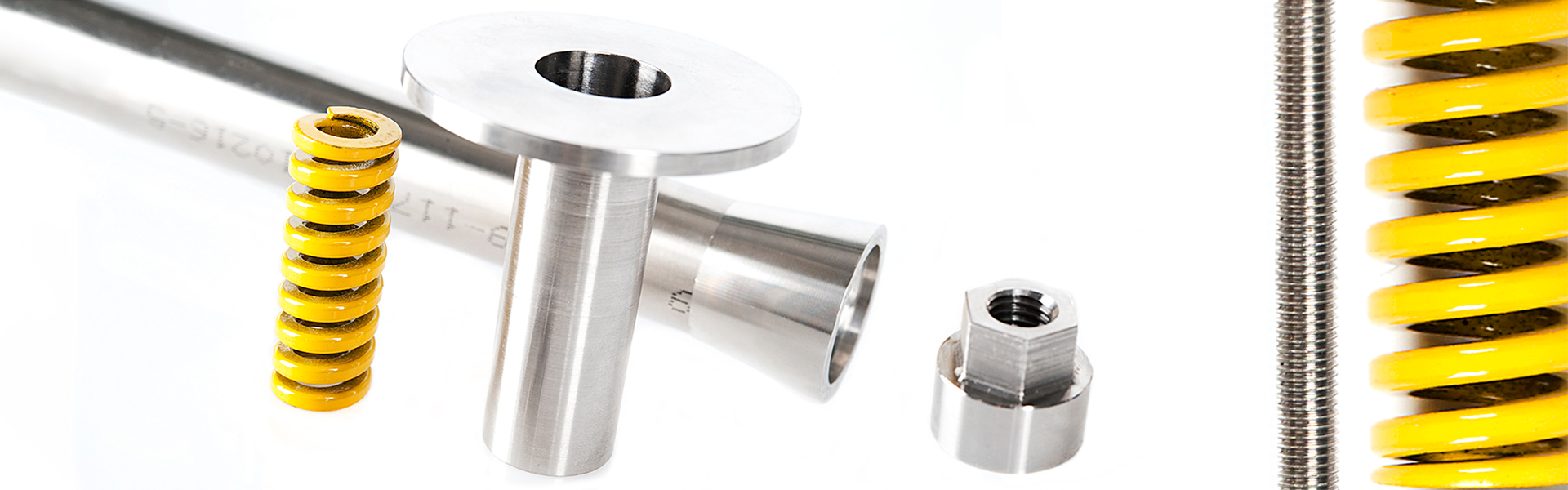
After seven years, work to replace more than 5,000 rusty iron bolts is completed in 2018. The new bolts, made of high alloy corrosion-resistant steel, weigh less, reducing the total weight that Vasa needs to carry by about 8 tonnes. Corrosion-resistant steel also reduces the risk of chemical reactions with the wood. Now that the new bolts are in place, we estimate that it will be at least 150 years before they need to be replaced again.
Continue to 2019 – 2023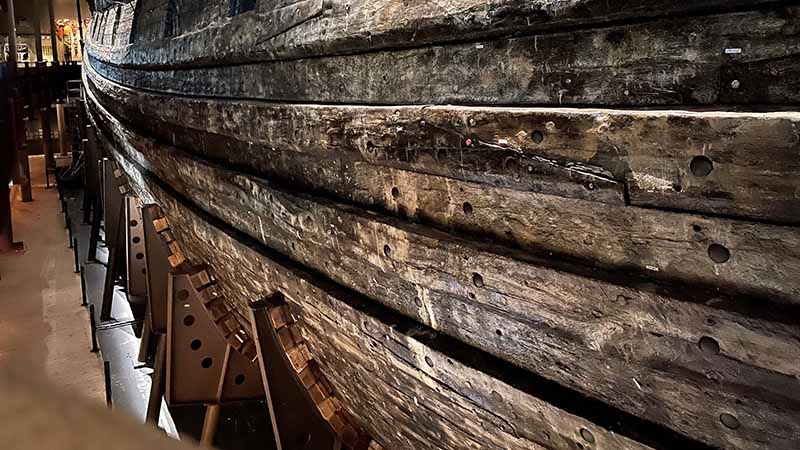
Work to design the new support structure is in progress. Because of the poor condition of the wood, samples must be taken and many tests conducted to make sure that Vasa will have the best possible support in the future.
Instead of 17 pairs of external cradle elements, Vasa will in the future have 27, along with an internal support structure that will slow down movements in the hull. Both the internal and the external support will be made of steel. The design work takes place in 2019 and 2020. The greatest challenge lies in supporting the ship’s bow and stern. The high sterncastle in particular is causing the designers a lot of headaches because the wood is heavily degraded and the aftercastle itself was fragile even when newly built.
In 2021, design drawings for the new support structure begin to be made. In 2023, the very first keel block under Vasa is replaced as a test before installation of the new support structure. Various padding materials that will lie against the ship’s hull also undergo testing.
At the end of 2023, the Vasa Museum launches a fundraising campaign to help cover the costs of the new support structure. The target group of the campaign is the general public, donors and sponsors.
Due to the difficult financial situation caused by the coronavirus pandemic, installation of the new support structure is delayed until April 2024.
Continue to 2024 – 2028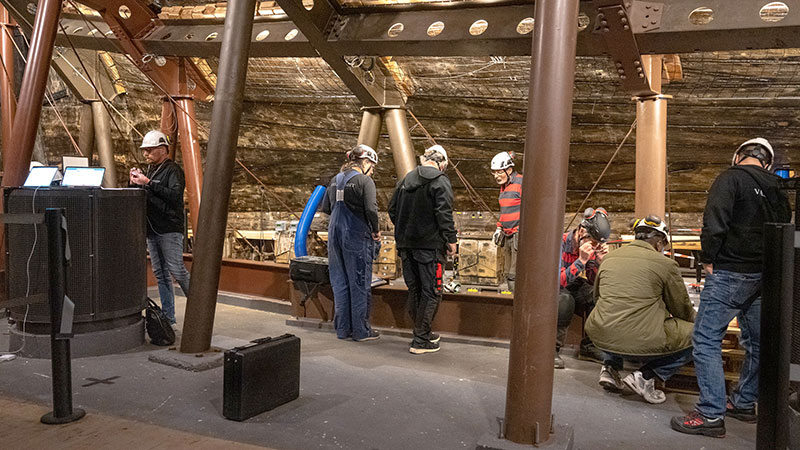
Installation of Vasa’s new support structure begins. The structure follows the design of Vasa. It is being built in a way that will make it possible to straighten the ship and make subsequent adjustments if necessary.
Installation of the new support cradle begins in April 2024. The 17 pairs of external cradle elements are being replaced with 27 new cradles positioned where they will help the ship the most. This will be followed by installation of the internal support structure.
As many of the new support legs will be positioned at points where the floor cannot bear the weight, the floor in the Vasa Museum’s ship hall will also be reinforced.
In January of 2024 Alleima became a key partner for the Support Vasa project. Alleima brings unique expertise and is sponsoring the Vasa Museum with all the steel needed for the ship's new internal support structure.
The aim is for the new support structure to be complete by 2028, just in time for the ship’s 400th anniversary.